Archives
- 2026-10
- 2026-09
- 2026-08
- 2026-07
- 2026-06
- 2026-05
- 2026-04
- 2026-03
- 2026-02
- 2026-01
- 2025-12
- 2025-11
- 2025-10
- 2025-09
- 2025-03
- 2025-02
- 2025-01
- 2024-12
- 2024-11
- 2024-10
- 2024-09
- 2024-08
- 2024-07
- 2024-06
- 2024-05
- 2024-04
- 2024-03
- 2024-02
- 2024-01
- 2023-12
- 2023-11
- 2023-10
- 2023-09
- 2023-08
- 2023-07
- 2023-06
- 2023-05
- 2023-04
- 2023-03
- 2023-02
- 2023-01
- 2022-12
- 2022-11
- 2022-10
- 2022-09
- 2022-08
- 2022-07
- 2022-06
- 2022-05
- 2022-04
- 2022-03
- 2022-02
- 2022-01
-
br Acknowledgment br Introduction Non steroidal anti inflamm
2022-06-07

Acknowledgment Introduction Non-steroidal anti-inflammatory drugs (NSAIDs) are widely utilized to treat pain and inflammation [1], but their chronic use is hindered by a variety of potentially serious adverse events that include gastrointestinal (GI) mucosal lesions, bleeding and perforations
-
On the other hand G a GLP could
2022-06-07
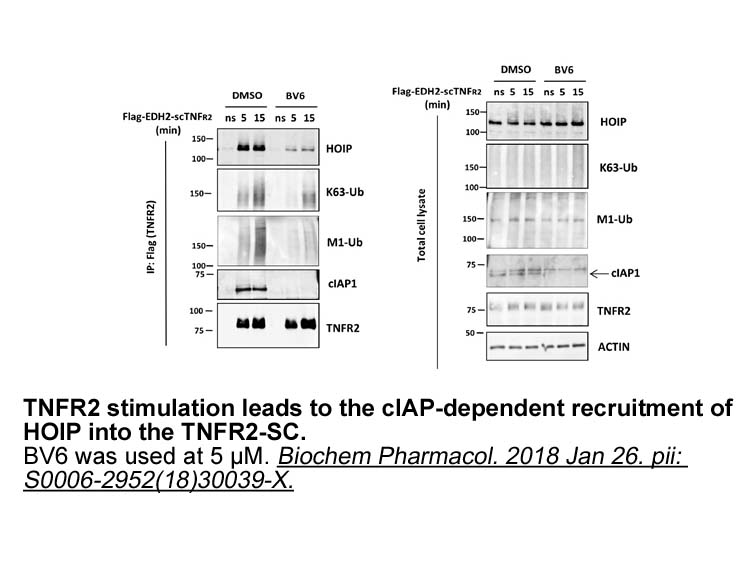
On the other hand, G9a/GLP could also alter neuronal function without directly altering the transcription level of particular plasticity-related protein: the consolidation of early-LTP to late-LTP, as well as the reversal of mGluR-LTD by G9a/GLP inhibition required PKMζ translation and its downstrea
-
br Acknowledgments br Introduction Lung
2022-06-07
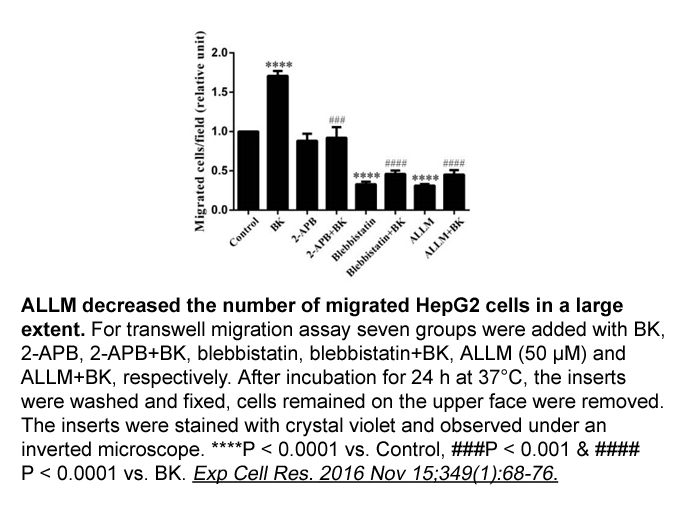
Acknowledgments Introduction Lung cancer is a common but extremely perilous cancer, with approximately 733,000 new incidences reported annually in China [1]. Lung cancer ranks highest in the causes of tumor-related mortality, accounting for approximately one quarter of all cancer deaths [2]. N
-
br Materials and methods br Results br Discussion
2022-06-07
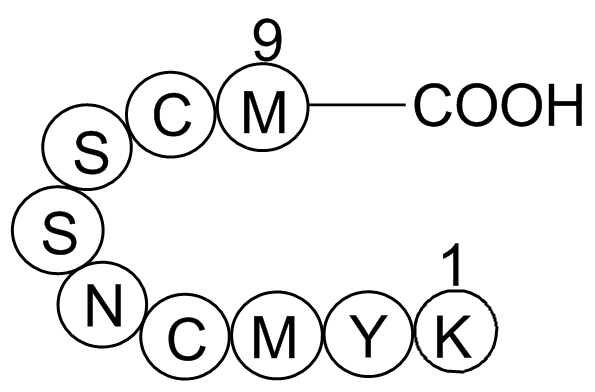
Materials and methods Results Discussion Numerous studies have identified important roles for HIF-1α in cellular function and dysfunction through its transcriptional activity [4]. A few studies have reported that HIF-1α is translocated to the mitochondria in human and mouse cancer cell line
-
RS testing has been extensively validated
2022-06-07
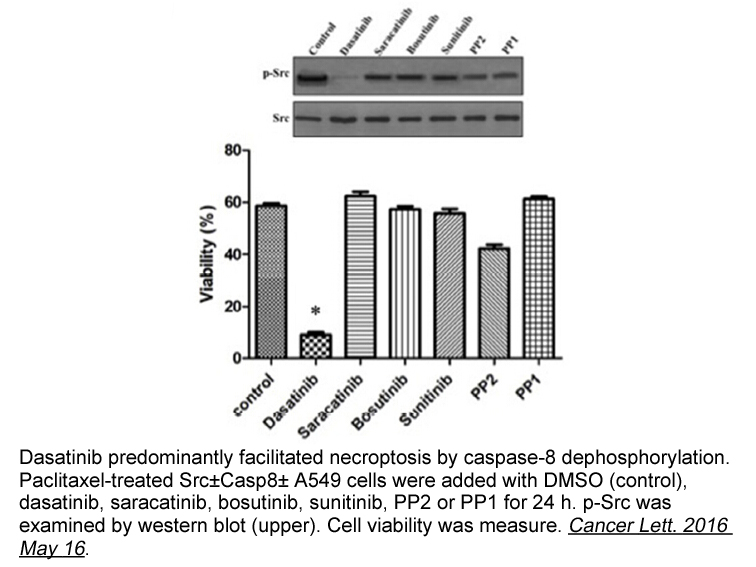
RS testing has been extensively validated in patients with early stage, ER+, HER2− patients. TAILORx, a randomized controlled trial to evaluate the role of adjuvant chemotherapy by RS, found no recurrence or survival benefit to the addition of chemotherapy to endocrine therapy in patients with inter
-
In addition to the importance
2022-06-07
In addition to the importance of heme as an enzymatic cofactor, heme also acts as an important iron source. In order to access the iron within heme, S. aureus encodes heme degrading enzymes known as heme oxygenases (Skaar et al., 2004b; Wu et al., 2005). The two heme oxygenases encoded by S. aureus,
-
br Concluding Remarks and Future Perspectives Our
2022-06-07
Concluding Remarks and Future Perspectives Our understanding of substrate targeting mechanisms utilized by kinases has grown tremendously in the past few years, but challenges still remain in relating these mechanisms to the organization of complex signaling networks. Substrate prediction based o
-
bet inhibitor A more quantitative view of
2022-06-07
A more quantitative view of kinase specificity suggests a continuum of phosphorylation rates for the various substrates of a particular kinase (Figure 4A). Such differences in ‘substrate quality’ can arise from variations in phosphorylation site or docking sequences and may explain why the timing or
-
There is evidence for an adverse sympatho stimulatory effect
2022-06-07
There is evidence for an adverse sympatho-stimulatory effect in the medulla oblongata mediated by the α1/β1 isoform, implying a possible benefit of selective α2/β1 activation [19]. While the stimulator BAY 41–2272 increases NO-sensitivity of both isoforms [20], a prevalence of the α1/β1 isoform comp
-
UV vis spectra of hsGC proteins were recorded with an
2022-06-07
UV–vis spectra of hsGC proteins were recorded with an HP8453 UV–vis spectrophotometer at 20°C. The corresponding ferrous, CO-bound and NO-bound species were prepared with the similar published procedure [7], [15]. The heme transfer reactions were performed by a UV–vis spectrometer with kinetic mode
-
It is interesting that SEC significantly inhibited cell
2022-06-07
It is interesting that SEC significantly inhibited cell migration and EMT in PC3 cells expressing a low RKIP level and HEK293T RKIP−/− cells, while had no effect on HEK293T RKIP+/+ cells. These observations can be interpreted that the RKIP-ANXA7 association may block SEC-induced ANXA7 GTPase activat
-
In addition for the function of
2022-06-07
In addition, for the function of GSNOR in brain, since GSNOR is the sole alcohol dehydrogenase isozyme in brain, the failure to detect ethanol dehydrogenase activity poses a problem if it is assumed that this enzyme has evolved and developed as a protective mechanism for ethanol detoxification in th
-
Thus one of the aim of the work was
2022-06-07
Thus, one of the aim of the work was to link the phytotoxic effect of m-Tyr on root growth of tomato seedlings to modification of RNS level and tissue distribution accompanied by determination of 3-NT content. Due to the role of GSNOR, which is suggested to be a key element in the interplay between
-
br Brief overview of GSK inhibitors We will briefly summariz
2022-06-07

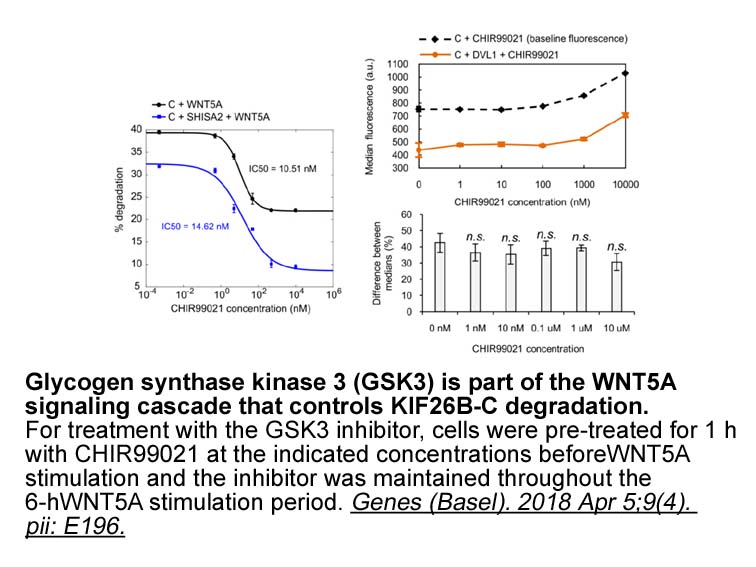
Brief overview of GSK-3 inhibitors We will briefly summarize some of the key aspects about GSK-3 inhibitors. Additional details of GSK-3 inhibitors in clinical trials have been recently reviewed [5]. GSK-3 is a complicated target as it is involved in many biological processes from neurology, diab
-
In this study we explore different mathematical models for
2022-06-07
In this study, we explore different mathematical models for describing the IVIVC of a preclinical dataset of 12 different dual GPR109A/GPR81 agonists. The objective is to establish a predictive model of in vivo lipolysis suppression in the rat based on in vitro potency data. First, a nonlinear mixed
8537 records 484/570 page Previous Next First page 上5页 481482483484485 下5页 Last page