Archives
- 2026-10
- 2026-09
- 2026-08
- 2026-07
- 2026-06
- 2026-05
- 2026-04
- 2026-03
- 2026-02
- 2026-01
- 2025-12
- 2025-11
- 2025-10
- 2025-09
- 2025-03
- 2025-02
- 2025-01
- 2024-12
- 2024-11
- 2024-10
- 2024-09
- 2024-08
- 2024-07
- 2024-06
- 2024-05
- 2024-04
- 2024-03
- 2024-02
- 2024-01
- 2023-12
- 2023-11
- 2023-10
- 2023-09
- 2023-08
- 2023-07
- 2023-06
- 2023-05
- 2023-04
- 2023-03
- 2023-02
- 2023-01
- 2022-12
- 2022-11
- 2022-10
- 2022-09
- 2022-08
- 2022-07
- 2022-06
- 2022-05
- 2022-04
- 2022-03
- 2022-02
- 2022-01
-
As regards LEPR Sun et al showed that the rs
2023-05-17
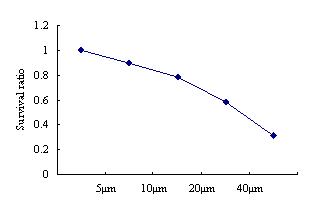
As regards LEPR, Sun et al. showed that the rs1137101-223A > G polymorphism influences the effectiveness of simvastatin on plasma HDL-C levels in CHD patients [35]. In accordance with the results of García-Bermúdez et al., however, no such an association exists between leptin rs2167270 (G > A) polym
-
The association of male gender with
2023-05-17
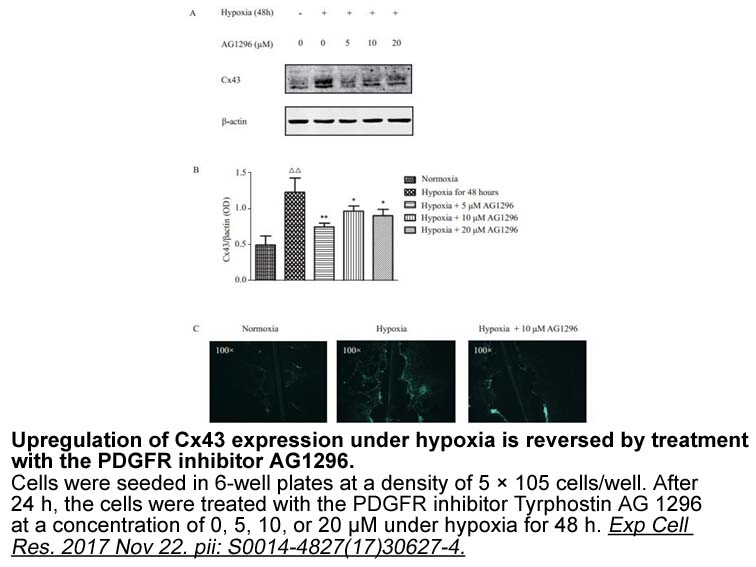
The association of male gender with increased atherosclerosis has stimulated interest in the role of androgen signalling in this condition. Androgens act (Fig. 2) by direct activation of androgen receptor (AR), a nuclear receptor that acts as a ligand-regulated transcription factor (Gao et al., 2005
-
br MHCI peptide editing N terminal extensions and the
2023-05-17
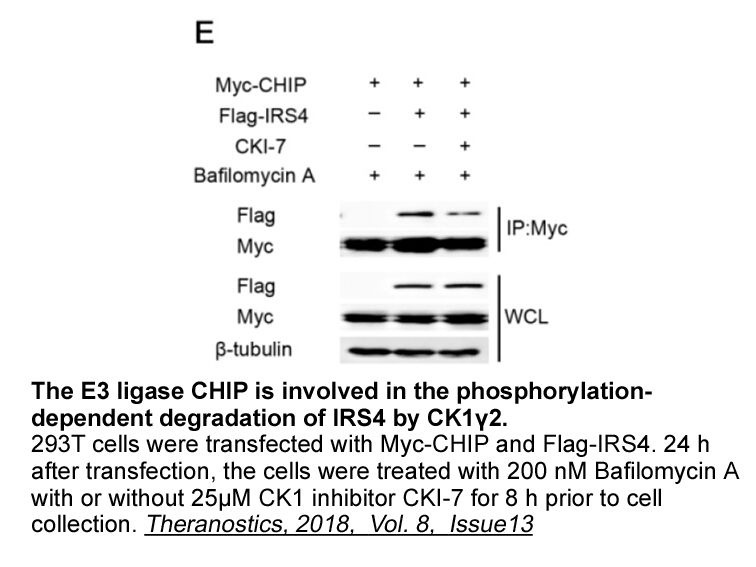
MHCI peptide editing, N-terminal extensions and the peptide loading complex Conventionally, peptide-MHCI binding is thought to require both amino- and carboxyl-termini for stable interaction (Madden, 1995; Bouvier and Wiley, 1994). Peptides with longer than optimal length (10–13 residues) have be
-
The theoretical calculations of ADME parameters molecular
2023-05-15
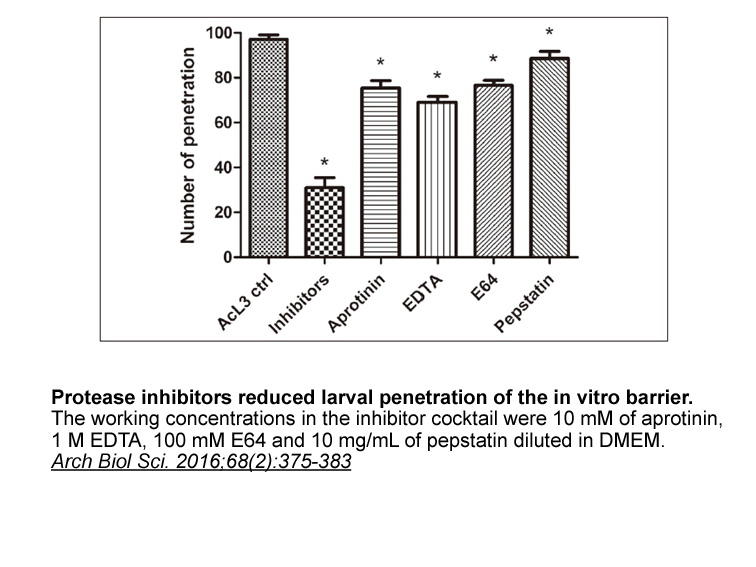
The theoretical calculations of ADME parameters (molecular weight (MW), log P, topological polar surface are (tPSA), number of hydrogen donors (nON) and acceptors (nOHNH), and volume) and DLS are presented in along with the violations of Lipinski’s rule. According to these data, all compounds (–) c
-
The present study has several limitations First
2023-05-15

The present study has several limitations. First, the results were obtained using RAW264.7 cells, which are derived from BALB/c mice infected with the Abelson leukemia virus (Raschke et al., 1978). However, these cells, which are a commonly used mouse macrophage cell line, show properties similar to
-
CCG 203971 LPA binds to six specific cell surface GPCR recep
2023-05-15
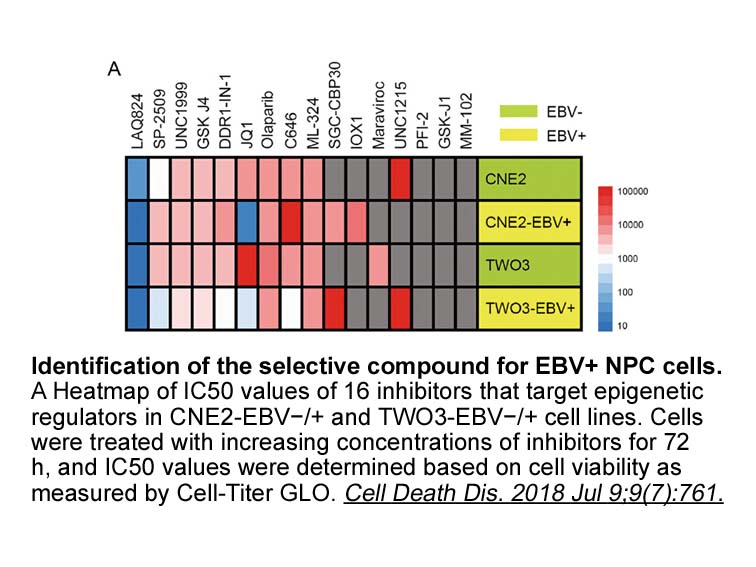
LPA binds to six specific cell surface GPCR receptors. The receptors LPA1 (lysophosphatidic receptor 1, formerly, Edg2), LPA2 (Edg4) and LPA3 (Edg7) belong to the endothelial differentiation gene family (EDG) and share sequence homology (50–60% amino CCG 203971 homology) An et al., 1997, An et al.,
-
br Introduction Cadmium is a major component
2023-05-15
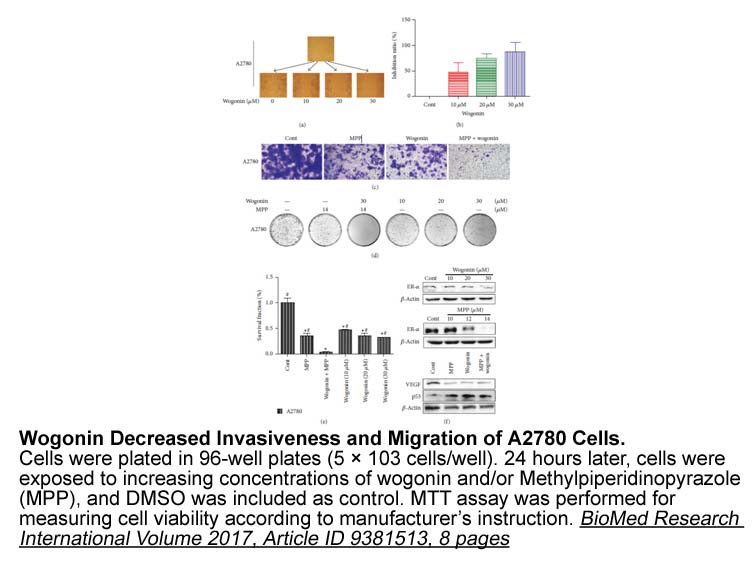
Introduction Cadmium is a major component of heavy metal pollution. Phytoremediation is considered to be the more effective method for recovering contaminated soil [[1], [2], [3], [4]] via cadmium absorption, transport, and accumulation. Several cadmium-associated proteins have previously been we
-
The amino hydroxy methyl isoxazolepropionic acid AMPA recept
2023-05-15
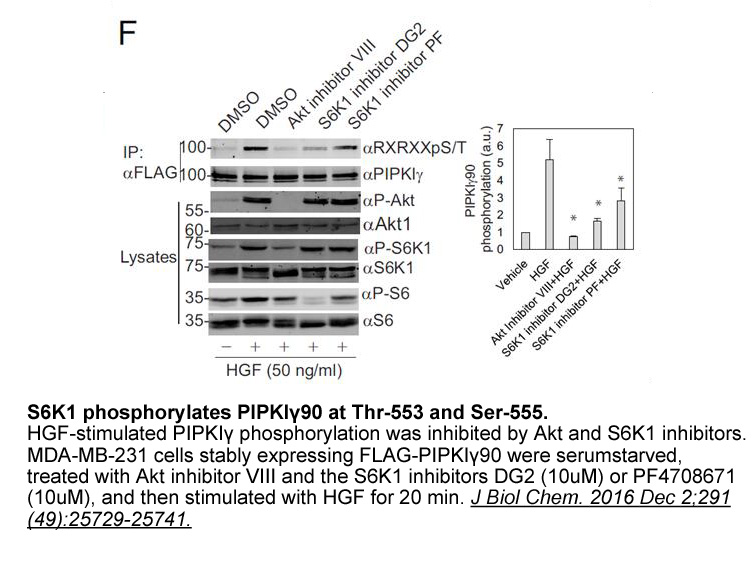
The α-amino-3-hydroxy-5-methyl-4-isoxazolepropionic hippo pathway (AMPA) receptor is also enriched in postsynaptic striatal neurons (Bernard et al., 1997, Kondo et al., 2000, Reimers et al., 2011). Its activity is subjected to the regulation by a mechanism involving phosphorylation (Lu and Roche, 20
-
There are in contrast many studies demonstrating that
2023-05-15
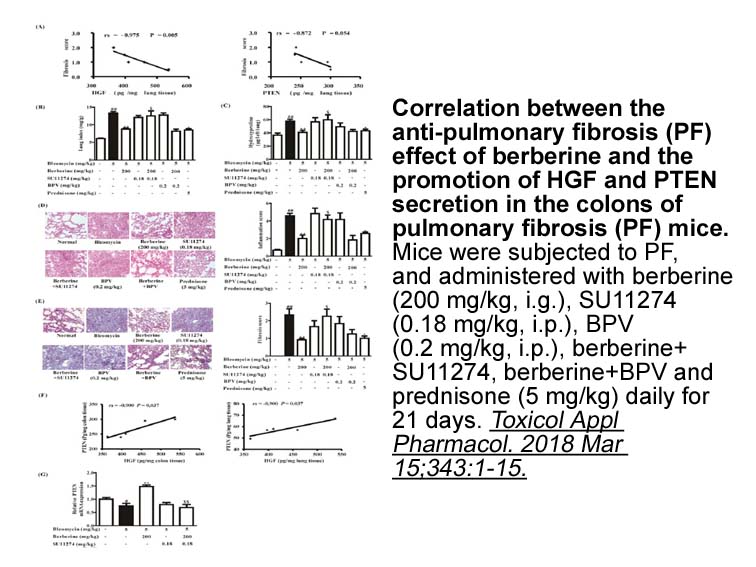
There are in contrast many studies demonstrating that sex steroids modulate (-)-Bicuculline methiodide processing of stimuli related to reproduction and this correlates with the observation that steroid receptors and aromatase are expressed in many brain nuclei that are part of the olfactory, visua
-
Furthermore a study in Drosophila has reported that Dpatj
2023-05-15
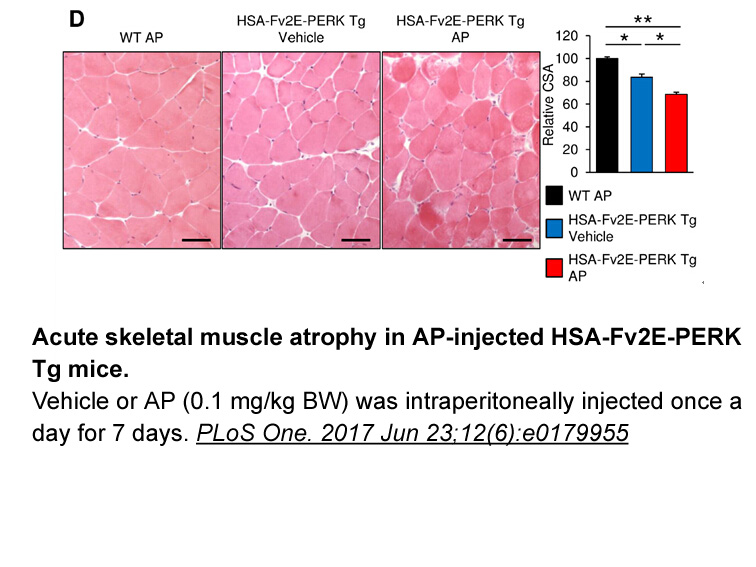
Furthermore, a study in Drosophila has reported that Dpatj can interact directly with Dmpar6 providing another potential mechanism linking the Crb to the Par complex [163]. In contrast, Wang et al. in 2004 [63] have shown that at least in MDCK epithelial cells, PAR6 binding to PALS1 interferes with
-
In view of the ubiquitous distribution of the arachidonate S
2023-05-15
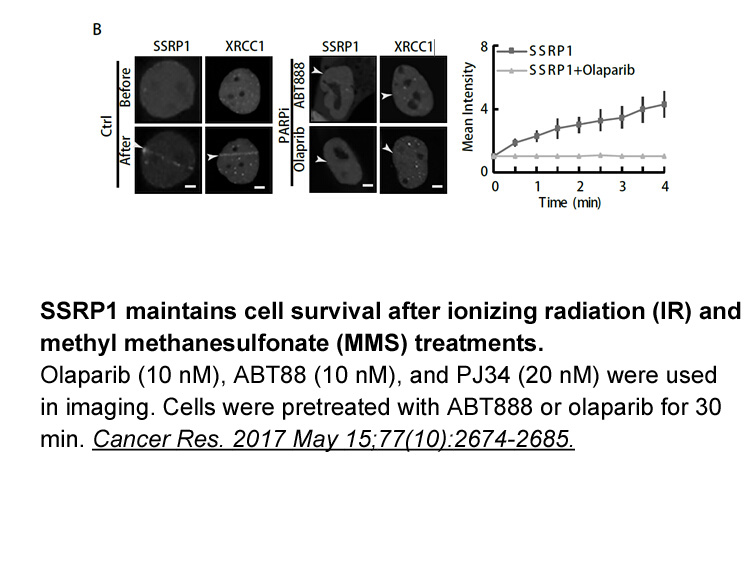
In view of the ubiquitous distribution of the arachidonate 12S-lipoxygenase isoforms and the variety of cellular reactions influenced by the resulting arachidonate metabolites, these products widely play important roles in many biological systems. The development of new type-specific inhibitors of t
-
br Introduction Chronic kidney disease CKD is a worldwide pu
2023-05-15
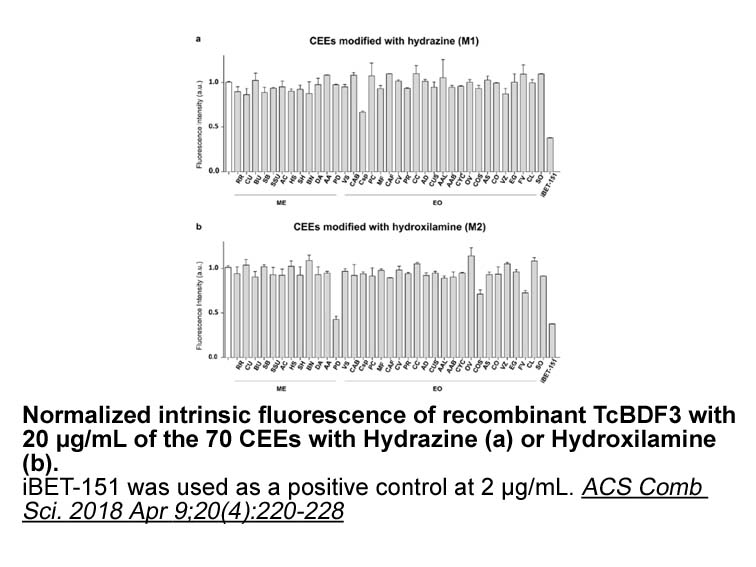
Introduction Chronic kidney disease (CKD) is a worldwide public health problem. This problem is even worse in socioeconomically deprived countries because lower income and social deprivation are associated with higher incidence of reduced GFR, progressive kidney function loss and end stage renal
-
The most widely recognized effects of
2023-05-12
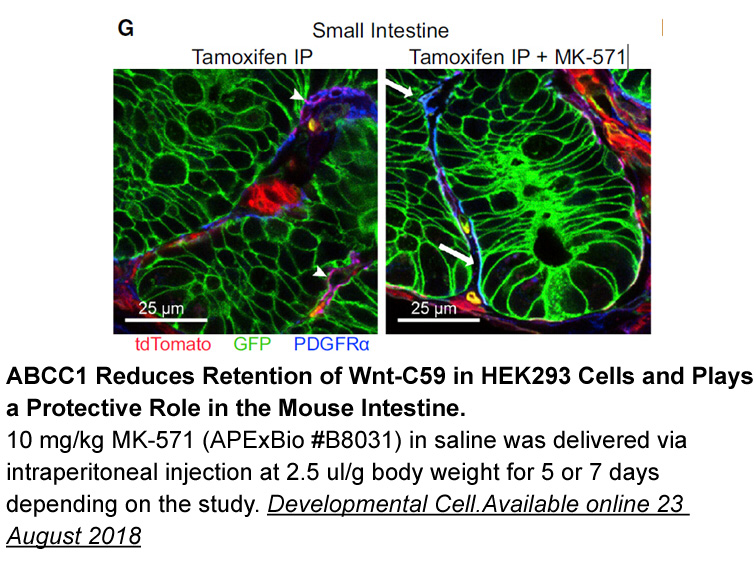
The most widely recognized effects of adenosine are operated through inhibiting A1R, one of the most abundant G protein-coupled receptors in lfm tissue [53]. A1R are located presynaptically, postsynaptically and nonsynaptically [54]. Effect of adenosine in neuronal circuits of adult mammals is to s
-
The most widely recognized effects of
2023-05-12
The most widely recognized effects of adenosine are operated through inhibiting A1R, one of the most abundant G protein-coupled receptors in lfm tissue [53]. A1R are located presynaptically, postsynaptically and nonsynaptically [54]. Effect of adenosine in neuronal circuits of adult mammals is to s
-
The most widely recognized effects of
2023-05-12

The most widely recognized effects of adenosine are operated through inhibiting A1R, one of the most abundant G protein-coupled receptors in lfm tissue [53]. A1R are located presynaptically, postsynaptically and nonsynaptically [54]. Effect of adenosine in neuronal circuits of adult mammals is to s
8539 records 369/570 page Previous Next First page 上5页 366367368369370 下5页 Last page