Archives
- 2026-05
- 2026-04
- 2026-03
- 2026-02
- 2026-01
- 2025-12
- 2025-11
- 2025-10
- 2025-09
- 2025-03
- 2025-02
- 2025-01
- 2024-12
- 2024-11
- 2024-10
- 2024-09
- 2024-08
- 2024-07
- 2024-06
- 2024-05
- 2024-04
- 2024-03
- 2024-02
- 2024-01
- 2023-12
- 2023-11
- 2023-10
- 2023-09
- 2023-08
- 2023-07
- 2023-06
- 2023-05
- 2023-04
- 2023-03
- 2023-02
- 2023-01
- 2022-12
- 2022-11
- 2022-10
- 2022-09
- 2022-08
- 2022-07
- 2022-06
- 2022-05
- 2022-04
- 2022-03
- 2022-02
- 2022-01
- 2021-12
- 2021-11
- 2021-10
- 2021-09
- 2021-08
- 2021-07
- 2021-06
- 2021-05
- 2021-04
- 2021-03
- 2021-02
- 2021-01
- 2020-12
- 2020-11
- 2020-10
- 2020-09
- 2020-08
- 2020-07
- 2020-06
- 2020-05
- 2020-04
- 2020-03
- 2020-02
- 2020-01
- 2019-12
- 2019-11
- 2019-10
- 2019-09
- 2019-08
- 2019-07
- 2019-06
- 2019-05
- 2019-04
- 2018-07
-
br Declaration of interest br Acknowledgments br
2022-08-03
Declaration of interest Acknowledgments This work was supported by grants from the Polish National Science Centre (PRELUDIUM grant no. 2013/11/N/NZ5/00270) and the European Commission FP7 Project Beta-JUDO (grant number 279 153), European Union EIT Health project DeTecT2D, Swedish Diabetes A
-
br STAR Methods br Introduction Arsenite is a well
2022-08-03
STAR★Methods Introduction Arsenite is a well-recognized toxic metalloid that commonly presents in the natural environment. Chronic exposure to arsenite can lead to a wide range of adverse health effects to human, including cancers, cardiovascular diseases, diabetes, skin lesion and neurodegene
-
In this current study we not only demonstrated the
2022-08-03
In this current study, we not only demonstrated the growth-inhibitory effects of the 2nd generation analog SL-1-39 on the HER2+ breast cancer cells, MDA-MB-453 and SKBR3 (Table 1), but we also demonstrated that the decrease in cell number was associated with an interruption of K-252c progression th
-
br Conclusion br Conflict of interest Please
2022-08-03
Conclusion Conflict of interest Please refer to the accompanying ICMJE disclosure forms for further details. Exotic species such as hedgehogs are becoming popular companion animals. Therefore, they are more commonly seen in veterinary clinics. Acariasis is fairly common in these animals, us
-
br Future perspectives sGC signaling is important in the
2022-08-03
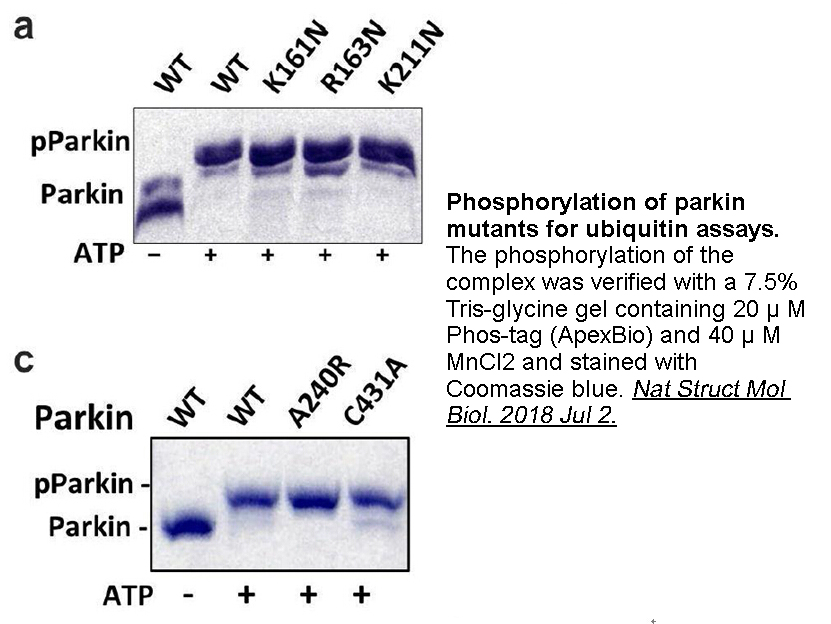
Future perspectives sGC signaling is important in the maintenance of multiple physiological functions. sGC is localized to cell membranes with both sGC Cys modifications and heme regulation identified as the crucial components in regulating sGC activity. Specifically, S-nitrosation of several com
-
Racemic protein crystallography has been proven
2022-08-03
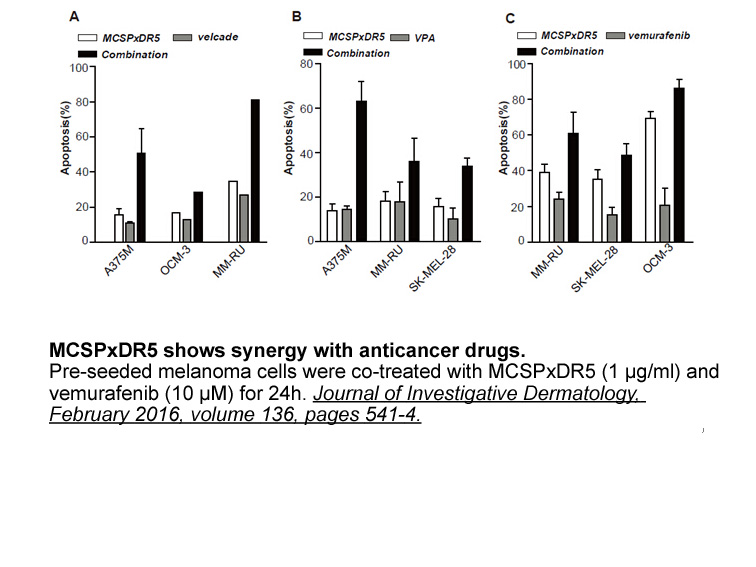
Racemic protein crystallography has been proven to be a powerful technique for crystallizing proteins , , , , . The structures of many difficult-to-crystallize peptides/proteins of different sizes were resolved by the racemic protein crystallography combined with the protein chemical synthesis , ,
-
br Conclusion The following is
2022-08-02
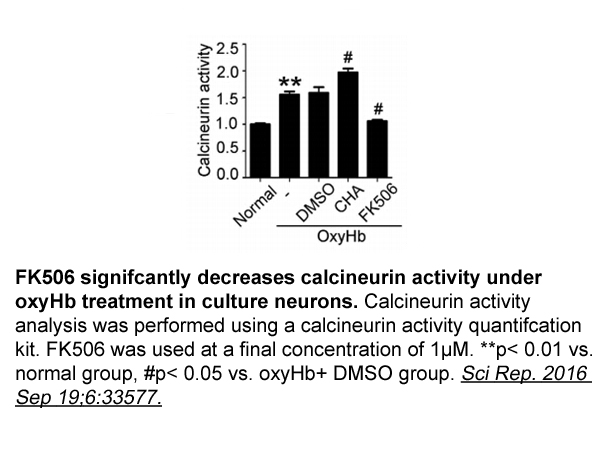
Conclusion The following is the supplementary data related to this article. Conflict of interest Funding Acknowledgements Peroxiredoxin VI (Prdx6) is a dual-functioning antioxidant enzyme that acts to protect biological membranes against damage caused by lipid peroxidation , . The enz
-
In conclusion our results show that P
2022-08-02
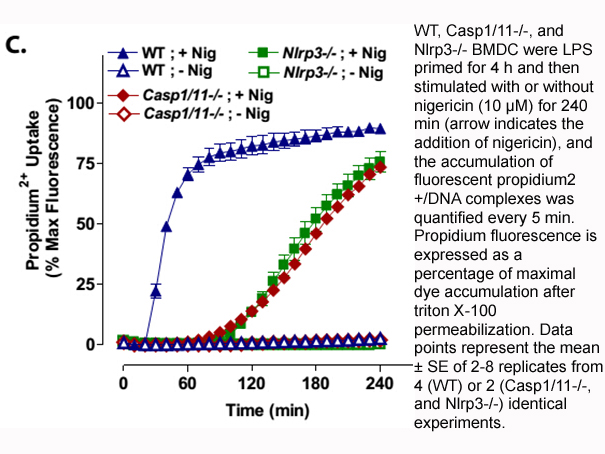
In conclusion, our results show that P7C3 enhances endogenous neurogenesis by upregulating the generation of endogenous neuroblasts and neural stem/progenitor cells by increasing the expression of neuroprotective proteins (Bcl-2, ki67, DCX, adam11, adamts20, and β-tub3) by activation of the cAMP/PKA
-
Despite the rapid development of synthetic ligands the
2022-08-02
Despite the rapid development of synthetic ligands, the endogenous ligands of GPR109A, GPR109B and GPR81 remained elusive until recently. This is probably the result of their relatively low potencies and their metabolite character (Table 1). Traditionally, agonists of GPCRs were believed to belong t
-
hGPR was mapped to human chromosome q and in
2022-08-02

hGPR55 was mapped to human chromosome 2q37, and in the human CNS it is predominantly localized to the caudate, putamen, and striatum (Sawzdargo et al., 1999). In rats, in situ hybridization indicated expression in hippocampus, thalamus and regions of the midbrain (Sawzdargo et al., 1999). Ryberg et
-
br Mechanism of action of herbs and their
2022-08-02
Mechanism of action of herbs and their active constituents used in hair loss treatment The hair growth cycle consists of 4 stages known as the anagen (active growth phase; takes 2–7years), catagen (involuting or regressing phase; takes approx. 2weeks), telogen (short resting phase; takes approx.
-
We first set out to identify the minimum
2022-08-02
We first set out to identify the minimum pharmacophore. Early structure activity relationships (SAR) indicated that the chloro substituents were not required and that the benzisoxazole moiety could be replaced by a number of other groups. A broad survey of “left-hand” hydrophobic moieties was conduc
-
Danazol br Results and discussion br Conclusion In summary s
2022-08-02
Results and discussion Conclusion In summary, starting from our previous lead Danazol 1, we replaced the 5-nitropyrimidine core with pyrimidopyrimidine to obtain a series of novel compounds as drug candidates of GPR119 agonist for treatment of type 2 diabetes. Some derivatives showed good ago
-
br Results and discussion br Conclusions br Introduction The
2022-08-02

Results and discussion Conclusions Introduction There is no effective treatment for HIV-associated neurocognitive disorder (HAND) which affects about half of the over 36 million people infected (Saylor et al., 2016). HIV can remain in the STAT5 Inhibitor during combination antiretroviral th
-
Next we designed substituents of the position Edge to face
2022-08-02
Next, we designed substituents of the 6-position. Edge-to-face aromatic interaction between aromatic ring of ligand and Phe162B needed to be retained because the interaction seems to be important for tight binding. 3′-Position of the 6-phenyl group of directs to a hydrophilic space where W1 exists.
16279 records 434/1086 page Previous Next First page 上5页 431432433434435 下5页 Last page